

rosalieredngreen.home.blog/2025/06/12/why-its-useful-to-speak-portuguese-and-how-to-learn-3/


The prospect of a steaming bowl of home-made soup is irresistible on a damp Sunday in January. Soup festivals are an annual tradition in towns and villages all over Portugal. In the village where I lived for five years, people flocked to the local parish hall to sample the mouth-watering soups and enjoy good cheer.
The events are all volunteer-run by community members. Volunteers set up the tables, issue the tickets, and, of course, make the soups. Festival goers pay just 10 euros for the privilege of trying as many soups as they can eat. The entry fee includes a traditional-style soup bowl created for the event. Many people collect them over the years.

The 2026 Festival das Sopas in my village sported nearly twenty different kinds of soup. Most of the soup chefs were Portuguese, but foreigners living in the community participated too. They included a woman from Holland, an American from Louisiana who made gumbo, a woman from South Africa, and a couple from the UK who made French Onion soup.
People lined up well before the doors opened. By the time the event was in full swing, I estimated a crowd of more than 200 people was busily sampling bowl after bowl. A friend of mine said she ate eight bowls! I was stuffed after five.
Some of the most popular Portuguese soups are the Sopa da Pedra and Caldo Verde. The Sopa da Pedra, or stone soup, is usually made with kidney beans, the spicy Portuguese chouriço sausage, pork ribs, bacon, potatoes, onion, and garlic. Caldo Verde is a kale soup. Check out these links to find the recipes.
Sopa da Pedra has a story behind it, a common theme found in several cultures. Supposedly, a group of hungry travelers stopped near a village. They had no food, but they had a large pot that they filled with water from a nearby stream. They put a stone in the pot and set it over a fire to boil. Curious passersby asked what they were doing. The travelers answered that they were making stone soup, but they needed a few more ingredients. Some people donated carrots, others peas, cabbage, and so on. Pretty soon, they had a rich, hearty soup that everyone enjoyed.
Of course, the work of the volunteer chefs is recognized. Not just by the happy smiles of those who line up to taste their soups, they also get a plaque to thank them for their hard work.

Subscribe to my blog to learn about daily life in Portugal. And discover my Digger Doyle mystery series.

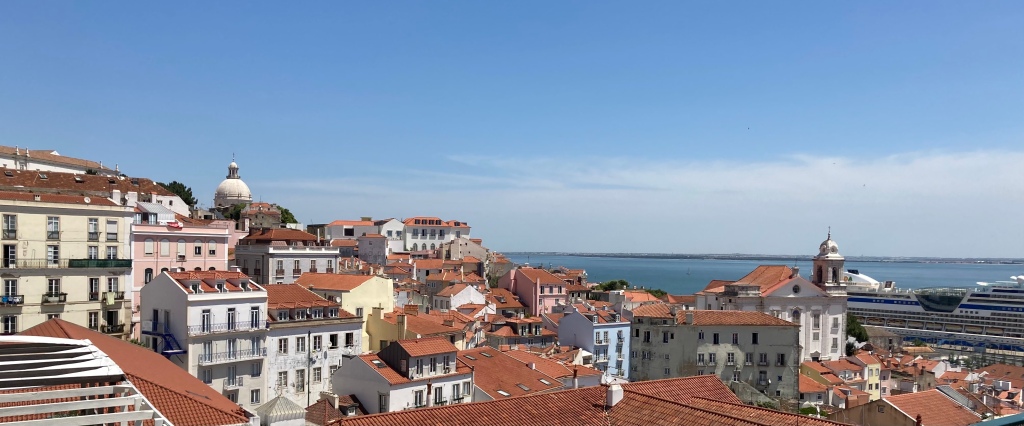
Portugal has become a much sought-after destination for many US retirees. I have to admit that I fell in love with the country when I visited it for the first time in June 2011. I moved here in 2019 and I am still in love!
For anyone considering the move, I always advise making a reconnaissance trip to the country. You can do all the research you like online, but nothing beats an in-person experience. One of the most wonderful things about Portugal is the interactions with individual Portuguese people. You will find so much kindness and charm.
That said, here are some of the things that people ask about when they post questions on the numerous Facebook groups that cater to expat interests.
Portugal is much less expensive than most other countries in western Europe. For some detailed comparisons about daily living expenses, check out: https://internationalliving.com/countries/portugal/cost-living-portugal/
It may come as news to some, but Portugal is not a mediterranean country. The western and southern coastlines are on the Atlantic Ocean. The Mediterranean sea ends at the straits of Gibraltar.
Still, Portugal’s climate is mild in winter. In the center and north of Portugal it can rain a lot during the autumn and winter. The weather is warm to hot in summer, the further south you go, the hotter and drier it is. For details, check out: https://www.expatica.com/pt/moving/about/portugal-climate-100067/
Portuguese food tends to be unsophisticated compared to, say French cuisine. But the ingredients are usually fresh and the cooking is honest. They do grilled meats, chicken and fish very well. Sardines and cod fish are hugely popular. The country produces excellent olive oil and lots of good quality inexpensive wine. And Port of course! For details on Portuguese food, check out: https://www.portugal.com/food-drink/10-best-portuguese-foods-and-dishes/
So start researching your journey! Follow my blog to learn more about daily life in Portugal.


November is not the best time to visit Ireland; after all, the country is known as the Emerald Isle because of its abundant rainfall. However, a late autumn visit provides the perfect excuse to sample the cuisine. Irish cuisine? You say, mockingly? Yes, in recent decades, the diversity of food available at hotels, cafes and pubs throughout Ireland has undergone a miraculous transformation.
The boring old boiled bacon, boiled potatoes, and boiled cabbage of old have been replaced by a dizzying array of Asian-inspired curries, salads bursting with formerly rare items like pomegranate seeds and feta cheese, and an assortment of vegetarian options, with nary a hint of boiled cabbage!
I know whereof I speak. I lived in Ireland in the 1970s and 80s, and I recently made a visit to the Auld Sod. On our first full day, we explored the city of Kilkenny and had lunch at the Left Bank. This is a truly impressive place. The former bank building has been transformed into a complex with a piano bar, patio bar, and atmospheric dining room. Very cosy on a rainy day!
Our trip took us south past the thriving city of Waterford, founded in 914 by the Vikings. Those ancient Scandinavians were also responsible for settlements in Wexford and Dublin. More recently, Waterford was known for exquisite hand-cut crystal. The factory is still in the city center, although much of its production has been outsourced to Slovenia and the Czech Republic.
After a couple of nights outside Cork city, and a quick visit to the small town of Kinsale, where we had another excellent meal. The new version of the traditional fish and chips is not your newspaper-wrapped meal eaten with your fingers. No, this was a huge piece of beautifully battered cod served with a slice of lemon and crisp, crunchy chips.
Heading back northeast, we stopped in County Tipperary to see the famous landmark known as The Rock of Cashel. Set atop a hill that dominates the countryside, this cluster of medieval buildings includes a round tower, a high cross, a Romanesque chapel, a Gothic cathedral, an abbey, the Hall of the Vicars Choral, and a fifteenth-century Tower House.
It was the seat of the kings of Munster, and legend has it that St. Patrick came here to convert King Aenghus to Christianity. The High King Brian Boru was crowned at Cashel in 978 and made it his capital.
Continuing northeastward, we drove over the Wicklow mountains to the valley of Glendalough. The sixth-century monk, St. Kevin, founded a monastery here, and visitors can stroll through the grounds to see the remains of his church and six other chapels.


Not far from Glendalough is the beautiful Powerscourt estate. It was originally the site of a thirteenth-century castle belonging to the La Poer family. In 1603, Queen Elizabeth 1 granted Richard Wingfield the castle and its lands. He became the first Viscount Powerscourt. The estate remained in the Wingfield family for 350 years. The elegant house looks out over formal gardens with statuary, a pond, fountains, and a magnificent view of the Wicklow mountains. Visitors can explore a Japanese garden and follow the trail of massive trees. One of the most memorable corners of this 47-acre estate is the pet cemetery. A gravestone is dedicated to a beloved cow who had 12 calves and gave more than 100,000 gallons of milk!


We spent our last two nights in Dublin, where I had been a student at Trinity College in the 1970s. Ireland has changed enormously since then. Instead of a country where jobs were scarce, and many of my classmates planned to emigrate to England or the US, Ireland is now home to many high-tech companies and a highly diverse population. On the streets, we heard people speaking Russian, Portuguese, French, Dutch, and various Asian and African languages.
Because our time was short, we opted to sight-see on the DoDublin hop-on-hop-off bus. A 24-hour pass costs 32 Euros per person. It starts in O’Connell Street and cruises the city center highlights. You can get off at Trinity College, where you can view the new exhibition of the Book of Kells, and shop on Grafton Street. Our tour was curtailed because of a visit that day by Ukrainian President Volodymyr Zelensky. Security was heavy around the Irish parliament buildings. We enjoyed an Irish coffee at Teeling’s whiskey distillery, but skipped the tour of the Guinness brewery. The smell of Guinness wafting down the Liffey was just too familiar to me in my student days. The drivers have a great sense of humor and will sing you an Irish song like Mollie Malone.


After nine busy days, our trip to Ireland came to an end, and we headed back to Portugal. One final piece of advice for visitors to Ireland. If you fly to Dublin Airport and plan to hire (rent) a car at the airport, arrive early in the day. Traffic on the M50 motorway that rings the city is HORRENDOUS! We hit it at 3.45 p.m. and spent nearly two hours crawling at walking speed to cover eight kilometers. Never again! Take an AirCoach into the city. Or use one of the numerous buses that go directly from the airport to cities all over the country.
Follow my blog to learn all about daily life in Portugal. Buy one of my mystery books at https://www.rosalierayburn.com


Moving to Portugal has suddenly become top of mind for Americans fearful of the new political climate. And why not? Portugal is a safe country with pleasant weather, friendly people and a low cost of living. What could be better?
Making the move involves a whole string of complex bureaucratic steps which I have covered in other blog posts. Once you have committed to relocating to Portugal, you will inevitably have to consider whether to rent or buy a place to live. Buying property in Portugal is a very different process from in the United States.
A key difference is that they do not have a Multiple Listing System. So, if you want to buy a property you may have to decide whether to stick with one realtor or work with several. A friend of mine said she ended up working with about ten different realtors so she could look at the places she had found in her online searches. According to her, this was because the realtors typically would not share information with each other.
In my recent experience, the realtor told me I could list my place with more than one agency, but he offered to charge me a lower commission if I would give him an “exclusive” contract. However, when I came to sign the contract, there was a sub-clause that said they would charge me a higher percentage commission if another real estate agency brought them a buyer. I wasn’t happy about that.
When I sold my house in the US, I had to fill out a multi-page document listing details about the construction, water supply and any problematic details. I also had to have a home inspector go over my place with a fine tooth comb looking for deficiencies.
So, I was surprised to learn that it is not customary in Portugal to require the seller to disclose problems that they have experienced with the property. I heard a neighbor tell me gleefully that she had sold a home and didn’t let the buyers know that the roof beams were riddled with woodworm.
It is also not common to require inspections. So it can be very much a case of buyer beware!
It is however, normal in Portugal to hire a lawyer to help with the purchase process. The lawyer can research the deed and other details to ensure that all the buildings on the property; including any sheds, barns or garages, are legal. I have heard of many cases where foreigners were eager to buy a place only to find that part of the house had been converted or an extension added without obtaining the legal permission from the local authorities. If you buy a place which has illegal additions you may have to rectify the situation before you can sell it later on. Some neighbors of mine were told they had to hire an architect and submit a plan for approval. It was expensive and time-consuming.
The lawyer will also advise you about the various taxes and fees; such as transfer tax, land registry fees and stamp duty, required as part of the purchase process. These items can add several thousand to the cost of a property, so it is important to figure them into your budget.
Some of the best known websites to use for finding property in Portugal are Idealista and this list compliled here: https://www.portugalist.com/portugal-property-websites/.
It is important to clarify what you are looking for. Do you want to live in a city close to stores and restaurants? If so, can you live in a high-rise building and walk or use public transportation? Do you prefer the country? If so, do you want to be in a village or a more isolated setting? How much land do you want? In Portugal you are responsible for clearing the land close to your dwelling to prevent fire risk. Failing to clear the land can result in fines.
Once you have found your dream home and negotiated a price, you will have to pay a deposit, or “promessa“ this is typically ten percent of the price of the home. The contract signed for the promessa typically allows around 60 days to complete the sale. And then it’s home sweet home! Good luck.

Follow my blog to learn more about daily life in Portugal. Check out my website, RosalieRayburn.com for news of my Digger Doyle Mystery novels.


Portugal is a popular retirement destination for an increasing number of Americans. The cost of living, agreeable climate, low crime rate, and friendly people are often cited as the key attractions. But Portugal, like many other countries, is experiencing changes that affect its affordability, and the processes that foreigners must follow to obtain legal residency.
According to recent reports, the number of foreigners living in Portugal has risen from around 400,000 in 2017 to more than 1.5 million by the end of 2024. That is in a country with a total population of 10.7 million! The increase has prompted calls for changes in the rules governing foreigners seeking Portuguese citizenship. Under a law passed in late October, the minimum legal residency period for naturalisation increases from five to ten years for most applicants. The new rules will require applicants to pass a civics test and a language test.

The cost of purchasing a property in Portugal has also risen sharply in the last few years. Eurostat, the statistical office of the European Union, reported that Portugal saw a 16.3 percent year-over-year increase among the member states in the first quarter of 2025. That compares with a 5.7 percent in the EU overall.
I have lived in central Portugal for six years. When I was house-hunting in 2019, there were a lot of acceptable homes available for between 100,000 to 150,000 euros. Now, that range is more like 250,000 to 300,000. I say “acceptable” because many homes on the market have been empty for several years, are in badly run-down condition, or have severe dampness and mold problems. All of which means a big investment to make them comfortable.
Rental rates have also jumped as foreign investors have flocked to Lisbon. The Portuguese capital has become a magnet for investors wanting to purchase for short-term rentals, making it tougher and tougher to find long-term options. The average monthly rent for a one-bedroom apartment in Lisbon starts from around 600 to 700 Euros, but 1,000 Euros is more typical.
Despite rising prices and legal changes that make relocation more complicated, Portugal remains a highly popular place for retirement. A report published earlier this year said the number of Americans living in Portugal rose from 14,129 to in 20223 to 19,258 in 2024, a 36 percent increase, according to Portugal’s Agency for Integration Migration and Asylum (AIMA). Some reports have said the number is even higher.

Follow my blog to learn more about daily life in Portugal. Read my Digger Doyle mystery novels and write a review. http://www.amazon.com/review/create-review?&asin=B0B44ZD6D1


It seems like the buzz never stops in my area of central Portugal. All summer long, the villages and towns held festivals every weekend. Now “festa” season is over it is time for flag-waving and speeches. That means It´s election time again in Portugal. Voters will go to the polls on Sunday, October 12, to choose representatives for their local towns and counties. Election season means fliers in the mailbox, posters and billboards everywhere, cars driving through the streets blaring “vote for so-and-so” messages and festive street rallies.
Unlike the U.S. where election campaigns drag on for months with a barrage of mean-spirited ads, Portuguese election campaigns last only a few weeks. Voters will cast ballots for the representatives in the Municipal Chamber (Câmara Municipal), which is like a city council as well as the Municipal Assembly (Assembleia Municipal), similar to a county commission, and the Parish Council (Junta de Freguesia). The Freguesia is like a village council, it operates in rural areas. Currently there are 308 municipalities and 3,000 parish councils in Portugal. Foreigners who have documentation to prove they are legal residents in the country can vote.

What I find refreshing about the election experience in Portugal is the messages are upbeat and positive. The multi-page flier slipped into my mailbox talks about taking care of the environment, promoting jobs and investment, urban transportation, education, healthcare. Current mayor Hugo Cristovão is running on the slogan, “A Força de Quem Faz” or “The Strength of those who do”.
Portugal has multiple political parties. The center-left Socialist Party (Partido Socialista) and center-right Social Democratic Party (Partido Social Democrata) have dominated politics on the national level since the 1974 Carnation Revolution which ended 41 years of the Estado Novo dictatorship. However, the right-wing Chega party, founded in 2019, has gained ground rapidly in recent years. It now has the second greatest number of representatives in the national assembly.

Driving around my area of central Portugal, near Tomar, I have noticed a large number of Chega billboards and posters. To me as an outside observer, this seems to indicate a large source of funds and an extensive and well-organized group campaign volunteers.
In the last couple of weeks, the streets of towns and villages are teeming with groups of political volunteers of all parties, waving banners, honking horns and generally making life interesting. We will see how it pans out on Sunday.

Subscribe to my blog to learn more about daily life in Portugal. Check out my author website RosalieRayburn.com for news about my latest Digger Doyle Mystery. See you next time!


August is a popular month for “Festas” in Portugal. Towns and villages all over the country erect lighted decorations, bandstands and mobilize volunteers to provide meals for the hundreds of festival goers who show up to enjoy the good vibes.
Festival season actually begins around the end of May. There are a lot of villages and each one has to get a weekend. Of course sometimes two villages have their event on the same days, but it’s entirely possible to hit more than one Festa on a weekend. The music, feasting and dancing usually continues over two or three nights. Any event in Portugal involves eating. The most popular dish is grilled chicken, “frango assado”. The chicken is spatchcocked then grilled on an outdoor barbecue and served with fries and rice. (Yes, that’s right both fries AND rice. You often see that combination in Portugal.)
When it comes to August, everyone says you need to realize that nothing much happens during this month in Portugal. Stores and restaurants close for a couple of weeks, families go on vacation, and hordes of French tourists arrive.
The French tourists are not really normal tourists. Many of them are the children or grandchildren of Portuguese who went to France years ago to find work. They return to their ancestral villages to see family members and enjoy the summer festivals. Sun-seeking visitors from the UK, Ireland, Holland and Germany also arrive en masse in Portugal during the summer.
Many normal business operations slow down in August. By law, employees in Portugal have a minimum of 22 days of paid leave. The law also prohibits employers from offering employees extra pay to forego paid leave days. (Wouldn’t it be nice if employees in the US had the same benefits.)

This year Portugal and most of southern Europe has experience an unusually hot summer. Since June temperatures have regularly been in the high 30sC (90sF.) But that hasn’t stopped the festival fun. Maybe that’s why all the feasting and music starts so late! The music often continues into the wee hours.
Subscribe to my blog by clicking “follow” and read all about daily life in Portugal. Listen to my interview with The Authors Show Podcast to hear all about my Digger Doyle mystery series.


Sweltering temperatures and an abundance of vegetation fed by a long wet spring have created ideal conditions for the wildfires now plaguing parts of Portugal and other southern European countries. But lessons learned from a deadly fire in 2017 spurred the country to respond more rapidly to send out alerts and to contain the blazes.
The website fogos.pt allows people to locate where the fires are and follow their progress. Another useful resource during fire season is Safe Communities Portugal. The website of this national non-profit organization links to information for all kinds of weather emergencies, crime alerts and even cyber crime.
I’ve spent seven summers in Portugal. Three years ago, in 2022, there was a dry winter and a heatwave in early July. Fires broke out all around my village. The response was swift. Within about 30 minutes of first spotting a plume of smoke in the distance, I heard the drone of planes and helicopters carrying water from a nearby lake to douse the flames. One day there were so many it sounded like a Word War II movie.
However 2025 is by far the hottest summer I’ve experienced. We’ve had temperatures in the mid-to high 30s Celcius (90s in Fahrenheit) with unpleasant regularity since mid-June. This week and next week in my town of Tomar, the thermometer is set to hit 38 C to 40 C or 100 F to 104 F for a couple of days. Luckily, my old stone house in the historic district of Tomar stays bearable with almost no need for air conditioning. I do, however, make sure to keep the shutters closed to keep out the sun during the hottest hours.
These seemingly endless high temperatures are caused by an area of high pressure, sometimes called a “heat dome”, stalled over southern Europe and North Africa. This weather pattern has followed an unusually wet late winter and spring. This year, it started raining in early January and kept on raining almost daily until mid-May. Needless to say, everything grew like mad. Now, after weeks of dry weather, the weeds and wild grasses have dried up and everything is crunchy underfoot when I take my dog Divina for a walk in the forest. On top of that, much of central and northern Portugal is covered with highly flammable eucalyptus trees grown for paper making.
No surprises then that wildfires are breaking out. In recent days, areas in Northern Portugal have been the worst hit. Hundreds of fire fighters (Bombeiros) have been fighting a fire near the picturesque town of Ponte de Barca.

Follow my blog to learn all about daily life in Portugal. Check out my website, RosalieRayburn.com for the latest on my Digger Doyle Mystery novels.

This month I ventured into the world of podcasts with an interview on The Author Show. This is a podcast where authors get to talk about their books. It’s a new way to reach potential readers. For readers, it’s a great way to discover different authors and styles of books. The podcast is accessible on many platforms including: Amazon Music, Apple /Podcast, iHeartRadio, GooglePodcast, Pandora, Podchaser, Soundcloud, Spotify and TuneIn.
The host of this show, Don McCauley, is a marketing expert and he gives his author subjects a lot of help to prepare for the fifteen minute interview. He emailed me a list of suggested questions and invited me to submit up to ten additional questions he could ask during the interview. The aim, he advises, is to grab the listener’s attention with a great hook.
How to do that? Well, you have to know your genre and the specific style of that genre. For example, if it is a mystery, do you have a lot of action? A tough he-man main character? Or a smart sassy female detective? My latest book “Windswept” has the intrepid young reporter Elizabeth “Digger” Doyle.
Here’s how The Author’s Show blurb describes the plot of Windswept. “Investigating the mysterious death of a controversial politician, Digger is thrust into a storm of political intrigue, buried secrets and personal risk.”
The setting of the book is crucial to the plot. “Set against the windswept landscapes of New Mexico, Windswept is a gripping LGBTQ+ political mystery that explores how far people will go to protect power, and what happens when the truth refuses to stay buried.”
Windswept is the third book in my “Digger Doyle Mystery” series. The first book, “The Power of Rain”, weaves political corruption and social activism, the second “The Sunshine Solution” blends investigative journalism, political manipulation and personal stakes. All three books are based on my experience as a journalist with the Albuquerque Journal, largest daily newspaper in New Mexico.
Each book in the series is available in print and ebook form from Amazon, and Kindle, and from Barnes and Noble and local book stores in Albuquerque and Santa Fe.

You can also buy my books through my website, RosalieRayburn.com
 rosalieredngreen.home.blog